Maine Traffic Laws & Road Rules (2025 Complete Guide)
This comprehensive guide to Maine traffic laws provides clear, actionable explanations of the most commonly searched driving rules in the Pine Tree State. Whether you're navigating scenic coastal Route 1, Interstate 95 through the Maine Turnpike, or rural roads in Aroostook County, understanding Maine-specific traffic regulations helps you stay safe and avoid costly violations. From double yellow line rules to wildlife crossing safety, school bus stop requirements, speed limits, OUI penalties, and winter driving laws—every section references the official Maine Revised Statutes Title 29-A (Motor Vehicles and Traffic) and guidance from MaineDOT (Maine Department of Transportation) and Maine State Police. This is educational information, not legal advice; always obey posted signs, signals, and directions from law enforcement.
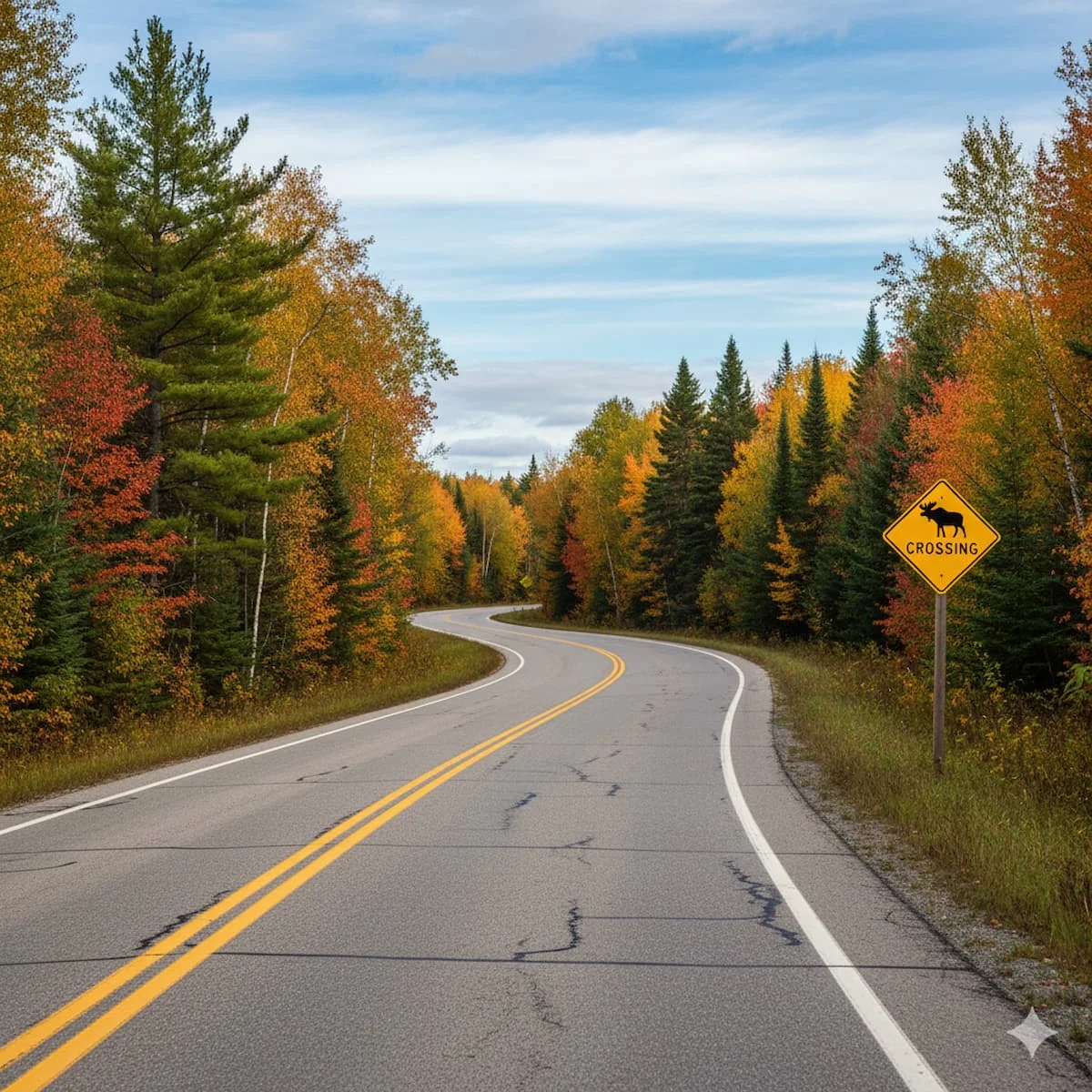
Maine roadways including I-95, Route 1, and scenic byways require strict adherence to lane markings, wildlife warnings, and seasonal driving conditions.
Maine Double Yellow Line Laws & No-Passing Zone Regulations
Maine Revised Statutes Title 29-A, § 2071: Double Solid Yellow Centerlines
In Maine, double solid yellow centerlines designate a no-passing zone where vehicles traveling in either direction are prohibited from crossing into the opposing lane to overtake another vehicle. According to Maine Revised Statutes Title 29-A, § 2071, these markings appear on curves, hills, intersections, and areas where sight distance is limited. Violating this law can result in fines ranging from $150 to $500, plus 4 points on your Maine driving record and potential insurance premium increases. Maine State Police actively enforce no-passing zones on scenic coastal Route 1, Route 2 through the western mountains, Route 9 (the Airline), and rural two-lane highways throughout the state.
Legal Exceptions: When You May Cross Double Yellow Lines in Maine
Maine law recognizes several limited exceptions where drivers may legally cross double solid yellow lines:
Left turns into driveways and private roads: You may cross double yellow lines when making a left turn into a residential driveway, business entrance, logging road, camp access, or private property entrance, provided it is safe and no oncoming traffic is present.
Avoiding obstructions: When a temporary obstruction blocks your lane—such as a disabled vehicle, fallen tree, road debris, construction equipment, or wildlife carcass—you may briefly cross the centerline if the opposing lane is clear and the maneuver can be done safely.
Following official directions: When law enforcement officers, traffic control personnel, emergency responders, or construction flaggers direct you to cross the centerline, you must follow their instructions.
Emergency situations: Emergency vehicles responding to calls may cross when necessary with lights and sirens activated.
These exceptions do not permit passing slow-moving vehicles, farm equipment, logging trucks, or recreational vehicles. The maneuver must be necessary, brief, and safe for all road users. Maine's rural character means you'll frequently encounter slower traffic, but patience is required in no-passing zones.
Ad not loaded or not displayed
Ad not loaded or not displayed
Maine Turnpike & Interstate 95: Double Yellow Line Enforcement
Interstate 95, which forms the backbone of Maine's highway system from Kittery to Houlton, does not use double yellow centerlines because it is a divided highway with physical barriers. However, exit and entrance ramps, service roads, and nearby secondary routes frequently feature double yellow markings. Maine State Police patrol I-95 and the Maine Turnpike Authority manages the southern toll section from York to Augusta. Violations on access roads can result in tickets that affect your driving record statewide.
Single Solid Yellow with Broken Yellow: Passing Rules on Maine Highways
On Maine roads, you may encounter a combination of one solid yellow line paired with one broken (dashed) yellow line. In this configuration, the lane with the broken yellow line on its side may pass when safe to do so, while the lane with the solid yellow line on its side must not pass. Always verify which marking is on your side of the centerline before attempting any passing maneuver. This combination is common on winding coastal Route 1, mountainous Route 2 and Route 16, and rolling terrain on Route 201 through western Maine. Check carefully before passing, as conditions and markings change frequently.
Ad not loaded or not displayed
Maine law prohibits passing across double yellow lines but allows left turns into driveways when safe.
Maine Right Turn on Red & Traffic Signal Laws
Maine Revised Statutes Title 29-A, § 2057: Right on Red After Complete Stop
Maine law permits right turns on red signals after coming to a complete stop at the stop line, crosswalk, or intersection edge, unless a "NO TURN ON RED" sign prohibits it. Before turning, drivers must:
Come to a full stop—your vehicle must reach zero miles per hour
Yield to pedestrians in or approaching the crosswalk
Yield to all vehicles and cyclists with the right-of-way
Check for "NO TURN ON RED" signs, which may apply at all times or during specific hours
Rolling through the stop or blocking the crosswalk is a common violation. Maine courts treat incomplete stops seriously, with fines typically ranging from $100 to $185 plus court costs and 4 points on your license. In tourist-heavy areas like Portland's Old Port, Bar Harbor, and Acadia National Park approaches, police closely monitor right-turn compliance.
Ad not loaded or not displayed
Ad not loaded or not displayed
Portland, Bangor & Augusta: No Turn on Red Zones
Downtown Portland intersections near Monument Square, Congress Street, and the waterfront district frequently post "NO TURN ON RED" signs due to heavy pedestrian traffic and complex signal phasing. Similarly, Bangor intersections near downtown and the Bangor International Airport access roads prohibit turns on red to protect pedestrian safety. Augusta's State Street and Capitol area also feature restricted intersections. Always read supplemental plaques beneath signs—some restrictions apply only during peak hours such as "NO TURN ON RED 7-9 AM / 4-6 PM MON-FRI."
Left Turn on Red in Maine: One-Way to One-Way Streets
Maine permits left turns on red from one-way streets onto other one-way streets, provided you come to a complete stop, yield to pedestrians and traffic, and no sign prohibits the turn. This scenario occurs primarily in downtown Portland and some older urban grids in Lewiston and Biddeford. Before attempting a left turn on red, verify that both streets are one-way in the appropriate directions and check for prohibitive signage.
Maine Traffic Signal Timing & Yellow Light Duration Standards
Maine traffic signals follow MaineDOT and Federal Highway Administration (FHWA) guidelines for yellow (amber) light timing, typically 3-5 seconds depending on intersection speed limits and geometry. If you are already in the intersection when the light turns red, complete your movement safely. Entering on yellow is legal if you cannot stop safely; entering on red is a violation subject to citation.
Pedestrian Crossing Signals in Maine Tourist Areas
Many Maine intersections in tourist destinations feature pedestrian countdown signals showing time remaining to cross. Drivers turning right on red must yield to pedestrians even if the pedestrian signal shows "DON'T WALK" or a countdown—pedestrians already in the crosswalk have the right-of-way. Failure to yield carries fines up to $250 and 4 points, plus potential civil liability if an accident occurs. Be especially cautious in Bar Harbor, Kennebunkport, Camden, and Freeport where tourist pedestrian traffic is heavy during summer months.
Maine Winter Traffic Signal Challenges: Snow & Ice Obscuring Signals
During Maine's harsh winters, snow and ice can accumulate on traffic signal lenses, making colors difficult to distinguish. MaineDOT maintains heated signal heads at critical intersections, but rural areas may experience temporary signal visibility issues. If you cannot clearly see signal colors due to snow buildup, treat the intersection as an all-way stop and proceed with extreme caution after yielding to all traffic.
Ad not loaded or not displayed
In Maine, always stop fully and yield to pedestrians before making a right turn on red.
Maine School Bus Stop Laws & Severe Penalties
Maine Revised Statutes Title 29-A, § 2117: Stopping for School Buses
Maine enforces strict school bus stop laws to protect children. When a school bus activates flashing red lights and extends its stop arm, the following rules apply under Title 29-A, § 2117:
Undivided roads (no median): All vehicles traveling in both directions must stop at least 20 feet from the bus and remain stopped until the red lights stop flashing and the stop arm retracts.
Divided highways (physical median or barrier): Only traffic traveling in the same direction as the bus must stop. Opposing traffic on the other side of a concrete median, guardrail, or raised divider may proceed cautiously.
Multi-lane roads without median: All lanes in both directions must stop. Painted center turn lanes or double yellow lines do not count as physical dividers.
Passing a stopped school bus is a serious traffic crime in Maine. First-offense penalties include mandatory court appearance, fines starting at $250 (up to $500), license suspension for 30 days, 6 points on your license, and significantly increased insurance rates. Repeat offenses or violations resulting in injury carry much harsher penalties including longer suspensions and potential jail time.
Maine School Bus Camera Programs: Automated Stop-Arm Enforcement
Many Maine school districts equip buses with exterior stop-arm cameras that record license plates of vehicles illegally passing stopped buses. Video footage is reviewed by local police or the Maine State Police, who issue citations to registered owners. Camera-based enforcement has increased significantly in Cumberland, York, Penobscot, Kennebec, and Androscoggin counties. Expect strict enforcement during morning (6:30-8:30 AM) and afternoon (2-4 PM) school hours on rural roads and residential streets.
Flashing Yellow vs Flashing Red School Bus Signals in Maine
Maine school buses first activate flashing yellow lights approximately 100-300 feet before the intended stop to warn drivers that the bus is preparing to stop for children. You should slow down and prepare to stop but are not yet legally required to do so. Once the flashing red lightsactivate and the stop arm extends, you must come to a complete stop. Do not proceed until the red lights stop flashing, the stop arm retracts, and children are clear of the roadway.
Enhanced Penalties for School Zone Violations in Maine
Maine designates school zones with reduced speed limits (typically 15 or 20 mph) during school arrival and dismissal times. When a school bus stop violation occurs within a designated school zone, judges may impose enhanced penalties including increased fines and longer license suspensions. Some Maine municipalities also use enhanced enforcement in school zones with dedicated patrols during critical hours.
Ad not loaded or not displayed
On undivided Maine roads, all traffic in both directions must stop when a school bus displays flashing red lights.
Ad not loaded or not displayed
Maine Speed Limit Laws & Interstate Highway Regulations
Maine Revised Statutes Title 29-A, § 2073: Basic Speed Rule & Posted Limits
Maine's basic speed law requires drivers to operate at speeds reasonable and prudent for current road, traffic, and weather conditions. Even when traveling at or below the posted limit, you can be cited if your speed is unsafe for circumstances such as heavy rain, fog, ice, snow, or moose crossing areas. Maine Revised Statutes Title 29-A, § 2073 also establishes default speed limits:
Business districts: 25 mph (unless otherwise posted)
School zones: 15-20 mph when children are present or during posted hours
Two-lane rural highways: 50-55 mph (varies by road classification)
Interstate 95 (rural sections): 70 mph
Interstate 95 (urban areas): 65 mph near Portland, Augusta, and Bangor
Maine Turnpike (toll section): 70 mph on rural segments
Always adjust your speed for conditions. Posted limits represent the maximum safe speed under ideal dry-pavement, daylight, low-traffic conditions—not a target or minimum. Maine's weather can change rapidly, especially in spring and fall.
Interstate 95 Speed Limits: Kittery to Houlton Corridor
Maine's Interstate 95 runs 303 miles from the New Hampshire border at Kittery through Portland, Augusta, Bangor, and on to Houlton near the Canadian border. Speed limits vary by section:
Kittery to Portland: 65-70 mph (Maine Turnpike toll section)
Portland metro area: 65 mph
Augusta area: 65 mph
Bangor to Houlton (rural): 70 mph
Maine State Police conduct aggressive speed enforcement on I-95, especially during summer tourist season and holiday weekends. Expect both stationary radar units and moving patrol enforcement. Speeding fines increase for speeds exceeding 15 mph over the limit, and reckless driving charges apply for speeds 30+ mph over.
Maine Work Zone Speed Limits & Doubled Fines
Maine law doubles fines for speeding in highway work zones when workers are present. Work zones are marked by orange construction signs, cones, and reduced speed limits (typically 45-55 mph). MaineDOT posts "WORK ZONE / FINES DOUBLED" signs to remind drivers of enhanced penalties. A typical 15-over speeding ticket might cost $150-$200; in an active work zone, the same violation could cost $300-$400 plus court fees and points. Maine's short construction season means intensive road work during summer months—expect frequent work zones May through October.
Maine Point System & License Suspension Thresholds
Maine uses a point system administered by the Bureau of Motor Vehicles (BMV). Speeding violations add:
1-9 mph over limit: 3 points
10-14 mph over limit: 4 points
15-19 mph over limit: 6 points
20-29 mph over limit: 8 points
30+ mph over limit: 10 points plus possible criminal charges
Accumulating 12 or more points triggers a license suspension. Points remain on your record for one year. Drivers can attend a state-approved defensive driving course to potentially reduce points or avoid suspension, but options are limited.
Speed Enforcement Technology in Maine
Maine State Police and local departments use radar, LIDAR (laser), and pacing methods to measure vehicle speed. Radar detectors are legal for passenger vehicles in Maine but do not exempt you from speed limits. Officers must be trained and certified on their speed measurement equipment. Maine does not currently use automated speed cameras or photo enforcement for speeding violations.
Contesting Speeding Tickets in Maine Courts
If you receive a speeding citation, you may pay the fine and accept points, or request a court hearing to contest the ticket. Maine District Courts handle most traffic violations. At trial, the officer must present evidence of your speed and proof that equipment was properly calibrated. You may cross-examine the officer and present defenses such as equipment malfunction, incorrect vehicle identification, or emergency circumstances. Consulting a traffic attorney is advisable for serious violations that could result in license suspension.
Maine OUI Laws & Operating Under the Influence Penalties
Maine Revised Statutes Title 29-A, § 2411: Operating Under the Influence
Maine prohibits operating a motor vehicle with a blood alcohol concentration (BAC) of 0.08% or higher for drivers 21 and over, 0.00% for drivers under 21 (zero tolerance), and0.04% or higher for commercial drivers. Even if your BAC is below the legal limit, you can still be charged with OUI if alcohol or drugs have impaired your ability to drive safely (Title 29-A, § 2411). Maine courts take OUI offenses seriously due to the state's rural character and limited law enforcement resources.
First-Offense OUI Penalties in Maine
A first-time OUI conviction in Maine carries:
Fines: $500-$2,000
Jail time: Up to 6 months (most first offenses result in suspended sentences with probation)
License suspension: 150 days (work permit not available for first 30 days)
Mandatory substance abuse screening and treatment if recommended
Completion of Driver Education and Evaluation Program (DEEP)
Possible ignition interlock device requirement for license restoration
Penalties increase substantially for repeat offenses, high BAC levels (0.15% or above), refusal to submit to chemical testing, or OUI incidents involving accidents, injuries, or minors in the vehicle. Maine's OUI laws are among the strictest in New England.
Maine Implied Consent Law & Chemical Test Refusal
Under Maine's implied consent law (Title 29-A, § 2521), by driving on Maine roads you automatically consent to chemical testing (breath, blood, or urine) if lawfully arrested for OUI. Refusing the test results in automatic administrative penalties including:
First refusal: 275-day license suspension
Second refusal within 10 years: 18-month license suspension
Third or subsequent refusal: Permanent license revocation
Refusal does not prevent prosecution—the state can still charge you with OUI based on officer observations, field sobriety tests, and other evidence. Refusal can be used against you in court and typically results in harsher penalties if convicted.
Ignition Interlock Device Requirements in Maine
Maine law requires ignition interlock devices (IID) for certain OUI offenders seeking license restoration. An IID is a breath-testing device connected to your vehicle's ignition system. The engine will not start unless you provide a breath sample below the programmed limit (typically 0.00% BAC). Maine requires IIDs for:
First-offense OUI with BAC 0.15% or higher: minimum periods apply
Second or subsequent OUI: extended periods required
Test refusal cases: often required for restoration
You must use a state-approved IID provider and pay all installation, monitoring, and removal costs (typically $75-$125/month). Attempting to circumvent the device or having someone else blow into it is a criminal offense that can result in additional penalties and extended license suspension.
Maine Wildlife Crossing Safety: Moose, Deer & Road Hazards
Moose Collision Prevention on Maine Highways
Maine has the highest moose population density in the lower 48 states, with an estimated 60,000-70,000 moose. Moose-vehicle collisions are a serious safety concern, particularly on rural highways in northern and western Maine. Routes 201, 6, 11, 16, and portions of Route 1 in Washington County have the highest collision rates. Moose crossings peak during dawn and dusk hours (5-7 AM and 7-11 PM) and during mating season (late September through October).
Recognizing Moose Crossing Warning Signs in Maine
MaineDOT places yellow diamond-shaped moose crossing warning signs in high-risk areas. These signs feature a black moose silhouette and indicate documented crossing zones. When you see these signs:
Reduce your speed, especially during dawn, dusk, and nighttime hours
Scan both roadsides constantly—moose are dark brown/black and difficult to see at night
Use high-beam headlights when no oncoming traffic is present to spot eye reflection
Never swerve suddenly—brake firmly in a straight line if a moose appears
If collision is unavoidable, aim for the rear of the animal, not the front
What to Do After a Moose or Deer Collision in Maine
If you strike a moose or deer on a Maine highway:
Pull safely off the roadway if possible and activate hazard lights
Call 911 immediately—moose collisions often cause serious vehicle damage and injuries
Do not approach injured wildlife—a wounded moose can be extremely dangerous
Contact Maine State Police to file an accident report
Document the scene with photos for insurance purposes
Maine law allows you to keep roadkill meat if you obtain a permit from the Maine Warden Service. Contact them at the scene if you wish to salvage the animal.
White-tailed deer collisions peak during November and December (mating/hunting season) and in May-June (fawning season). Other Maine wildlife hazards include black bears (occasionally crossing roads in search of food), wild turkeys, porcupines, and raccoons. Always drive defensively on rural Maine roads, particularly at night.
Maine Pedestrian Laws & Crosswalk Right-of-Way Rules
Maine Revised Statutes Title 29-A, § 2056: Pedestrian Right-of-Way at Crosswalks
Maine law requires drivers to yield to pedestrians in crosswalks—both marked and unmarked. An unmarked crosswalk exists at every intersection as the imaginary extension of the sidewalk across the roadway, even when no painted lines are present. Under Title 29-A, § 2056, when a pedestrian is in a crosswalk or attempting to enter a crosswalk, drivers must:
Yield the right-of-way to the pedestrian
Stop and remain stopped until the pedestrian has crossed the driver's lane and is at least 6 feet into the adjacent lane
Not pass another vehicle that has stopped for a pedestrian
Failure to yield to a pedestrian in Maine carries fines up to $250 and 4 points on your license. If the violation results in injury or death, criminal charges including aggravated assault or manslaughter may apply.
Portland & Bar Harbor Pedestrian Safety Enforcement Zones
Maine's tourist destinations—particularly downtown Portland's Old Port, Bar Harbor near Acadia National Park, Kennebunkport's Dock Square, and Camden's village center—have high pedestrian volumes during summer months. Portland Police and Maine State Police conduct targeted pedestrian safety enforcement operations using plainclothes officers as decoys at marked crosswalks. Officers in crosswalks signal to cross, and patrol cars ticket drivers who fail to yield. Expect heightened enforcement June through September during peak tourist season.
Mid-Block Crosswalks & Pedestrian-Activated Signals in Maine
Some Maine roadways feature mid-block crosswalks with pedestrian-activated rectangular rapid-flashing beacons (RRFB) or in-pavement LED lights. When a pedestrian activates the signal, drivers must stop and yield. These devices are common on Route 1 in coastal tourist towns, near beaches, and in college areas near the University of Maine campuses. Ignoring activated pedestrian signals is a violation equivalent to failing to yield at a crosswalk.
Maine's heavy snowfall creates large snow banks at intersections that can obscure pedestrians and sightlines. During winter months, approach intersections and crosswalks with extra caution. Pedestrians may be forced to walk in the roadway if sidewalks are not cleared. Maine law requires property owners to clear sidewalks within 24 hours after snow stops falling in most municipalities, but enforcement varies.
This guide summarizes common Maine traffic rules based on Maine Revised Statutes Title 29-A and MaineDOT guidance. It is not legal advice. Always follow posted signs, signals, and instructions from law enforcement. Consult an attorney for specific legal questions or if you are facing traffic citations or criminal charges.
Maine Traffic Laws & Driving Rules (2025 Complete Guide)